

US government orders Anthropic to pull latest models; Bernie Sander's AI Wealth Fund Act; Martin Scorsese goes AI | #9
Plus: a prestigious literary prize is rocked by AI fraud, and an essay on why the years before post-AGI abundance will be the hardest economic period of our generation

AI is changing everything for creatives. Diffusia breaks down what actually matters, direct to your inbox every Sunday.

Main Stories
❌ The US government just shut down Anthropic's two newest AI models — for everyone
On June 12, the US Commerce Department ordered Anthropic to suspend access to its newest models, Fable 5 and Mythos 5, for all foreign nationals — including Anthropic’s own non-citizen employees. Instead of enforcing the restriction selectively, Anthropic shut both models down globally. It’s the first known case of U.S. export controls shutting down a commercial AI model already in public use.
Why it matters: This is the clearest sign yet that AI tools can vanish overnight due to government action. For creatives relying on frontier models for writing, design, video, or research, AI workflows now carry real geopolitical and regulatory risk — making backups and flexible toolchains increasingly important.
📎 Bloomberg · Fortune · Semafor
🏆 A literary prize’s winning story — which judges called “sublime” — was flagged as 100% AI-generated
After the 2026 Commonwealth Short Story Prize published their five regional winners in Granta on May 12, the Caribbean-winning entry — “The Serpent in the Grove” by Jamir Nazir — was flagged by AI detection tool Pangram as 100% AI-generated. Two other regional winners face similar allegations. The Commonwealth Foundation, which does not use AI detectors in its judging process, called the story’s language “precise yet richly evocative.” It is now conducting a review but has not withdrawn any prizes.
Why it matters: The New Yorker’s framing cuts to the heart of it: the real question isn’t just “did a chatbot write this?” — but how do we value authorship and literary voice when institutions can’t even tell the difference?
📎 WIRED · The New Yorker

Other Currents
🏛️ Bernie Sanders wants the public to own half of every major AI company
Sanders introduced the American AI Sovereign Wealth Fund Act on June 1 — a bill that would impose a one-time 50% stock tax on companies like OpenAI and Anthropic, depositing the equity into a public fund giving Americans voting rights and board representation.
🎬 Scorsese endorses AI storyboarding + joins AI startup as advisor
Renowned filmmaker Martin Scorsese announced he joined AI startup Black Forest Labs as an advisor and uses their image tool, Flux, for storyboarding. The Art Directors Guild, which represents storyboard artists, accused him of turning his back on the human artists who helped him create his most memorable works.
📸 Apple’s Photos app just got its biggest AI editing upgrade
At WWDC 2026, Apple announced three new AI features for Photos: Spatial Reframe (change the camera angle of a shot after the fact), Extend (expand an image beyond its original frame), and an upgraded Clean Up tool. All powered by Apple Intelligence, available on September’s upcoming iOS 27.
✝️ The Pope's AI encyclical now has a reader edition
Clare Birch has published a condensed, accessible version of Magnifica Humanitas for those who want the substance without the 82-page Vatican document.
🛠️ Tool of the week: Krea 2
Krea launched Krea 2 last month — a new image model that emphasizes aesthetics, style transfer, and creative direction. Instead of relying solely on prompts, creators can guide images using reference images and moodboards, making it especially useful for exploring distinct visual styles and art directions.
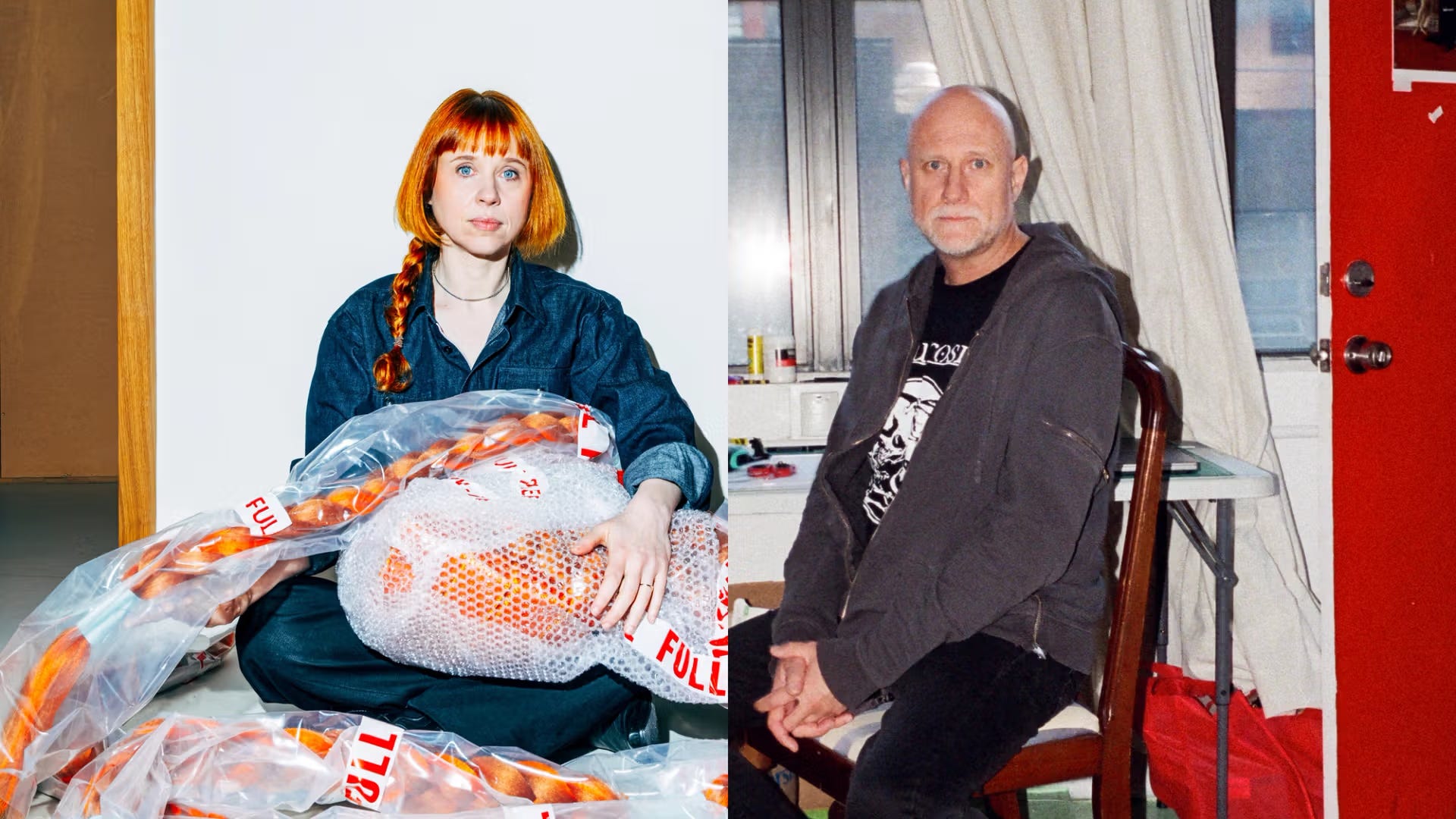
🎨 Artist Interview: “Trevor Paglen and Holly Herndon on Making Art with AI and What the Discourse Is Missing”
In a new conversation with Totei, neither artist positions themselves as AI skeptic or enthusiast. This interview is worth reading in full.
“For me, we’re using tons of AI in the studio, but I’m well past the point of showing you an image I made with AI. I don’t care about that. There might be an image generator somewhere in the pipeline, but that’s a way to get a very crude prototype of a direction to go in.
It’s much more on the back end—running experiments, using novel datasets. We can now do in an afternoon what would have taken a year and $100,000 a couple years ago. We’re working a lot with neural data now. I’ve been spending a lot of time in fMRI machines, looking at text and images, and we’ve been slowly building this model that predicts how my brain responds to different kinds of stimuli.”
💭 Worthy read: “The Messy Middle”
Molly Kinder's essay on why the years between today and the post-AGI abundance Silicon Valley keeps promising will be the hardest economic period of our generation.
That’s the week! See you all next Sunday.
— Ari 🪞