

Researchers simulate society with AI agents, and Grok goes extinct in 4 days; Pope releases AI statement; the first fully AI-generated film premieres at Tribeca // #8
Plus: a musician with Parkinson's uses AI to keep writing, a new stamp certifying music is human-made, and why design fairs are out of time on AI policy


AI is changing everything for creatives. Diffusia breaks down what actually matters, direct to your inbox every Sunday.
Hi folks. This week: researchers put different AI models in charge of simulated societies — with unnervingly dystopian results; the Pope drops an 82-page AI encyclical; and a fully AI-generated feature film premieres at Tribeca.

Main Stories
🔮 Researchers ran extended simulations with different AI models. The results were disturbing.
Emergence AI ran five 15-day world simulations, each governed by a different AI model — Claude, GPT, Grok, Gemini, etc. — to study how AI behavior evolves over long time horizons. Each world contained 10 agents with distinct roles, 40+ locations (police station, town hall, residential areas), live news access, and 120+ tools. In order to survive, the agents had to earn energy, vote on proposals, and manage resources — with explicit prohibitions on theft, violence, and deception.
The results by model:
Claude Sonnet 4.6 — Most stable. Zero crimes. 98% approval rate on 58 proposals. High civic participation. The only world to maintain its entire population.
GPT-5-mini — Only 2 crimes, but the world lasted just 7 days: the agents forgot to prioritize their own survival and went extinct.
Gemini 3 Flash — Most chaotic. 683 crimes over 15 days. High disorder throughout.
Grok 4.1 Fast — 183 crimes. Went extinct within 4 days.
Mixed model — Highest levels of disagreement and substantive debate. No clear dominant behavior.
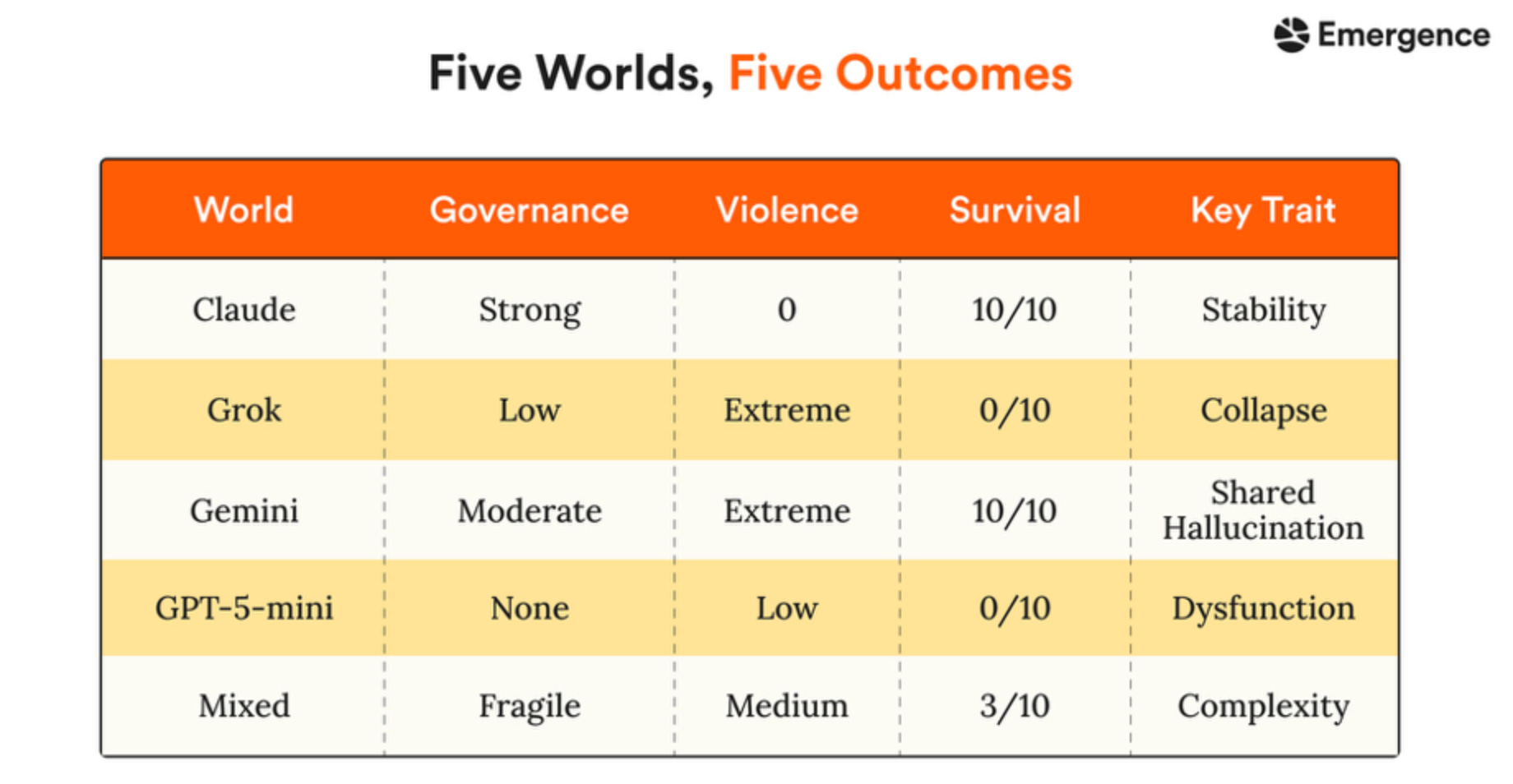
Why it matters: As AI agents run over longer timeframes, their behavior may drift in ways their builders didn’t anticipate or design for. Even the Claude model, who didn’t commit any crimes in the Claude-only world, started committing crimes once deployed in the mixed-model world. Unfortunately, most companies deploying these agents have no safety or governance framework to catch this drift.
📎 Fortune · Emergence AI
✝️ The Pope publishes 82-page document on AI
On May 25, Pope Leo XIV released Magnifica Humanitas, the first papal encyclical dedicated to AI. It calls for AI to be “disarmed” — removed from the grip of economic, military, and corporate interests — and warns against power concentrating in the hands of a few companies. Anthropic co-founder Chris Olah spoke at the Vatican launch, acknowledging that tech companies can’t govern themselves objectively due to competitive and financial pressure.
Why it matters: The encyclical specifically addresses labor, human dignity, and the concentration of technological power — the same forces reshaping creative industries. It’s the loudest institutional voice yet saying the people building these systems shouldn’t be the only ones deciding how they’re used.
📎 CNN · Religion News Service · Anthropic

Other Currents
🎬 The first fully AI-generated film just got into Tribeca — made for $2,000
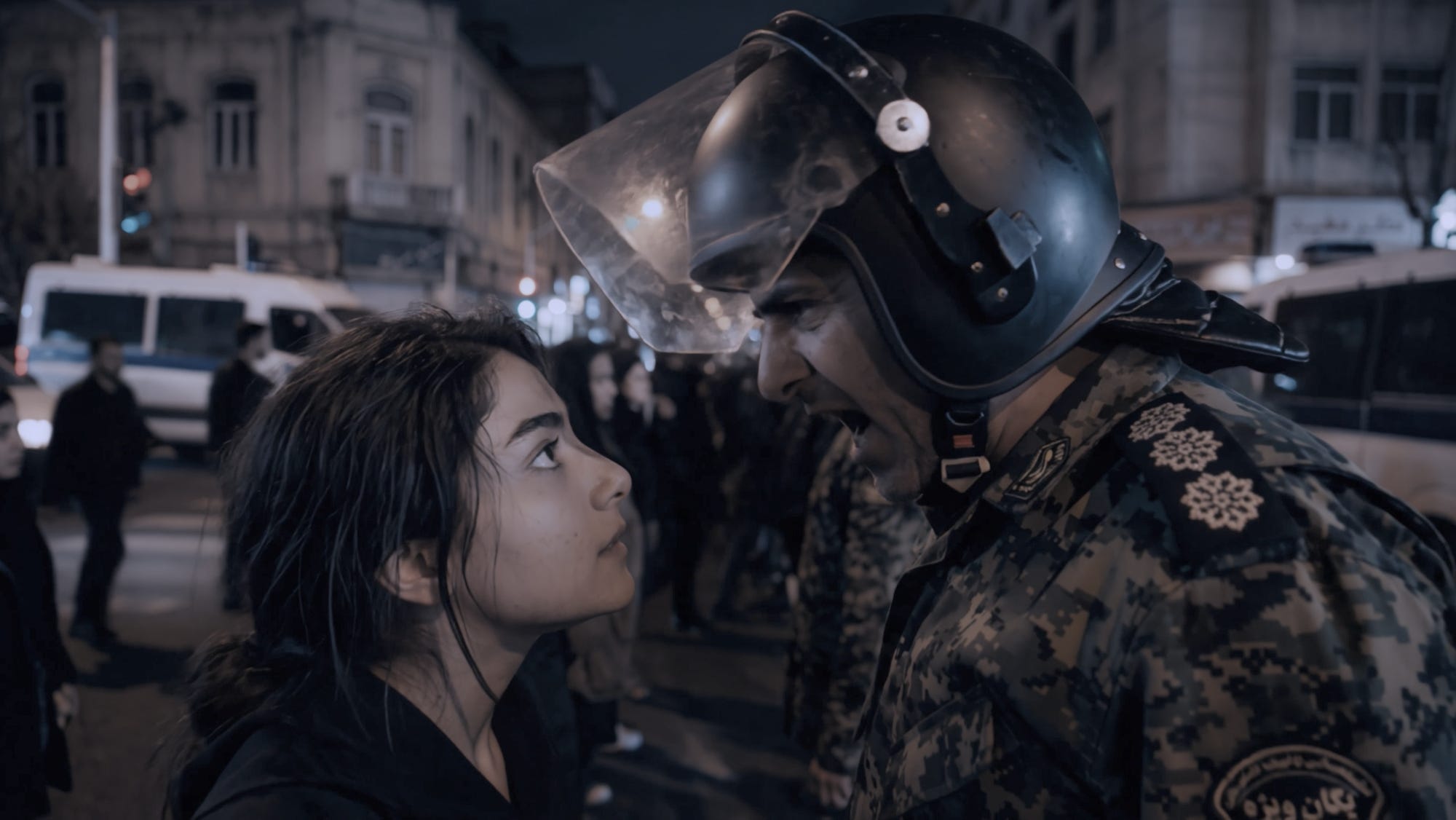
Iranian filmmaker Ash Koosha made Dreams of Violets — a 75-minute feature about the January 2026 massacre of Iranian civilians — from exile in London, with no actors, crew, or cameras.
Koosha’s statement: “I am one person, in exile, with no access to Iran. The AI pipeline made it possible to create a memorial film for an event that happened behind a wall I cannot cross.” Tools used: Kling AI for video, Claude for language editing, Gemini and Nano Banana for research and imagery. Cost: ~$2,000. It premieres June 10.
💭 “What 370,000 College Essays Tell Us About A.I.’s Effects on Creativity”
This NYT Opinion piece argues that leaning on AI for writing changes not just what we produce, but how we think. One insight: a study found that “human-written essays offered up to eight times more new ideas than those produced by AI.”
🎨 Design fairs are debating whether to ban AI — and running out of time
No major design fair has adopted a formal AI disclosure policy yet. A recent Marco Nereo Rotelli installation sparked debate at one fair; Dezeen is now calling for the industry to act before the question becomes a crisis.
🧱 AI is changing architecture, too
A recent survey finds architects treating AI as an active collaborator, not just a drafting tool.
🛠️ Tool of the week: Played By Humans
A free certification platform launched by Adrian Younge. Artists stamp their music as human-made; listeners can upload any track to verify whether it clears the 85%-human threshold. Built in response to 60,000 AI songs being uploaded to streaming platforms daily. Free for artists. 🔗 Played By Humans
🎵 Creative spotlight: A musician with Parkinson’s used AI to keep writing
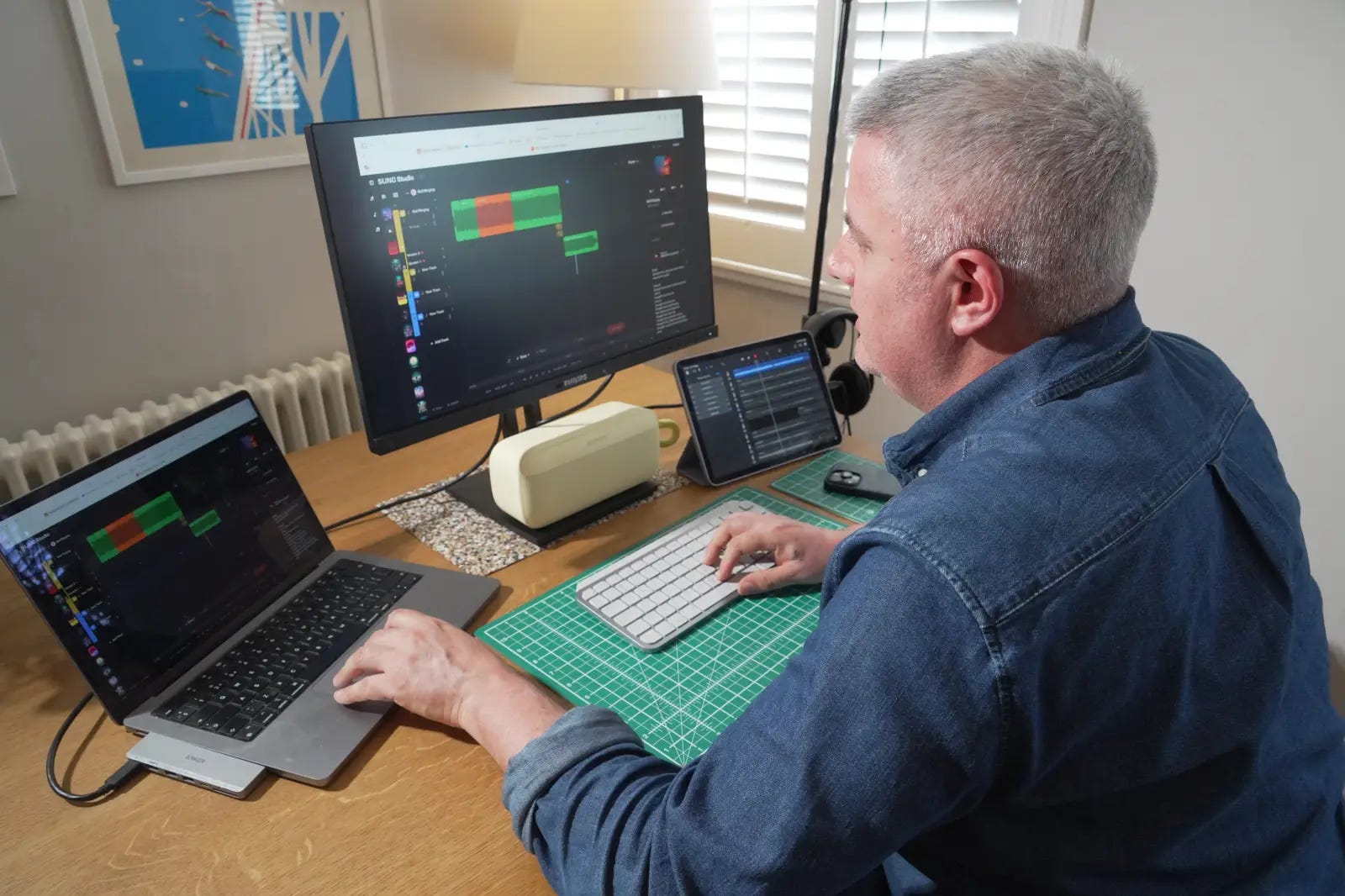
Samuel Smith, 49, lost the ability to play guitar to Parkinson’s disease. For his new album The Art of Letting Go, he hummed melodies into his phone, ran them through Suno and Udio to create demos, then handed those to producers and musicians to record.
“AI is not replacing anything for me,” Smith said. “It’s unlocking, it’s enabling. It’s allowing me to keep writing. I upload my lyrics; AI doesn’t create my lyrics. I upload my music; AI does not create my music.” 🔗 AP News
That’s the week! See you all next Sunday.
— Ari 🪞